


The stakes in modern construction and large-scale industrial projects have never been higher. When managing multimillion-dollar budgets and tight deadlines, project managers understand that a single logistical misstep can trigger a cascading series of delays, budget overruns, and severe safety hazards. At the heart of many of these complex operations is the task of moving massive amounts of material. Lifting heavy loads high into the air or across treacherous terrain requires precise engineering, rigorous planning, and an exhaustive understanding of site dynamics. Unfortunately, navigating the machinery market is often an overwhelming endeavor. Project coordinators are frequently met with a dizzying variety of machinery models, confusing pricing structures, complex liability agreements, and logistical hurdles that can derail a project before the foundation is even poured.
Making the wrong choice—whether it is underestimating the reach required, ignoring ground bearing pressure, or failing to secure the proper municipal permits—can result in catastrophic equipment failure or crippling daily delay fees. To prevent these costly errors, this comprehensive guide has been designed to serve as your definitive roadmap for a seamless machinery procurement experience. We will break down the entire process from start to finish. You will learn how to accurately assess your lifting needs, match the right machinery to your specific site dynamics, meticulously vet potential vendors, prepare your site for delivery, and implement non-negotiable safety protocols. By following the detailed strategies outlined in this guide, you can ensure your next major project is executed with precision, safety, and ultimate financial efficiency.
Map Out Your Load, Reach, and Terrain Requirements First

Before you ever pick up the phone to request a quote, you must have an uncompromising, mathematically sound understanding of exactly what you are lifting and where it is going. Guesswork in this phase is the leading cause of project delays and accidents. Many project managers make the mistake of assuming a machine’s maximum capacity is its working capacity, completely failing to account for the complex physics involved in lifting operations.
Calculate Precise Load Weights and Lift Radiuses
The foundation of your planning is the critical lift plan. This is not merely a rough estimate; it is a precise mathematical calculation that dictates the feasibility of your entire operation.
-
Determining Net Weight vs. Gross Weight: You must know the exact weight of the item being lifted (the net weight), but you also have to calculate the gross weight. This includes the weight of the hook block, the headache ball, all wire ropes, and every piece of rigging hardware attached to the load. All of these “deductions” reduce the machine’s lifting capacity.
-
Understanding the Lift Radius: The lift radius is the horizontal distance from the center of rotation of the machinery to the center of gravity of the load. As the radius increases—meaning the further you reach away from the machine—the lifting capacity plummets dramatically.
-
Analyzing Load Charts: Every piece of machinery comes with a specific load chart. You must cross-reference your total gross weight and your maximum lift radius against this chart to ensure the operation remains within safe operating parameters.
Evaluate Ground Conditions and Access Points
Even the most powerful machinery is useless if the ground beneath it cannot support the immense pressure it exerts. Assessing the terrain is a crucial step that many commercial construction companies overlook until it is too late.
-
Calculating Ground Bearing Pressure: When a heavy load is lifted, the machine’s center of gravity shifts, exerting massive downward force on the outriggers or crawler tracks. You must consult with geotechnical engineers to ensure the soil composition can withstand this ground bearing pressure without shifting or collapsing.
-
Utilizing Mats and Cribbing: If the soil is weak, sandy, or heavily saturated, you will need to utilize specialized outrigger pads, crane mats, or timber cribbing to distribute the weight safely over a larger surface area.
-
Navigating Overhead and Underground Obstacles: Thoroughly survey the site for overhead obstructions such as high-voltage power lines, tree canopies, or adjacent structures. Equally important is identifying underground hazards like water mains, gas lines, or hollow vaults that could collapse under the weight of the machinery.
Factor in Specialized Attachments
Standard hooks and basic setups are rarely sufficient for complex lifts. You must anticipate the need for specialized attachments early in the process. When considering heavy equipment rental, providing your vendor with precise details about the load’s dimensions and fragility will help them supply the correct accessories.
-
Spreader Bars and Lifting Beams: If you are lifting a wide, fragile load (like a prefabricated roof truss or a delicate piece of manufacturing equipment), spreader bars are essential to prevent the rigging from crushing the top edges of the load.
-
Custom Slings and Shackles: Evaluate whether you need synthetic web slings to protect finished surfaces or heavy-duty wire rope slings for abrasive, high-heat environments.
Match the Machinery to Your Specific Lift Dynamics
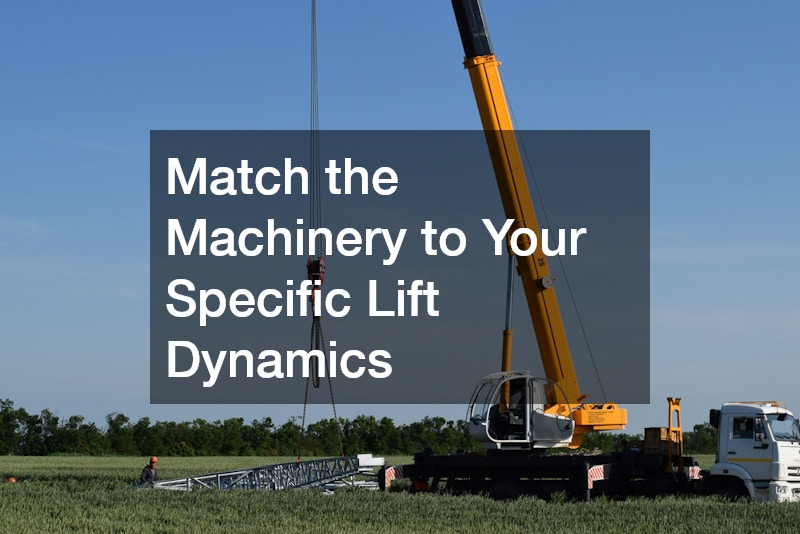
Once your load calculations and terrain assessments are complete, the next critical phase is selecting the exact type of machinery that fits your project’s unique footprint. The market offers a highly specialized array of options, and choosing the wrong category can lead to profound logistical failures.
Decide Between Mobile, Crawler, and Stationary Options
Every classification of lifting machinery is engineered for a specific environment. Understanding the strengths and limitations of each is paramount.
-
Mobile Units (All-Terrain and Rough Terrain): These are highly versatile machines. Rough terrain models feature oversized tires and a compact footprint, making them ideal for navigating muddy, unpaved job sites. All-terrain models offer the flexibility of driving at highway speeds to reach a site, then deploying hydraulic outriggers to perform heavy lifts. They are exceptional for projects requiring mobility and quick setups.
-
Crawler Units: Mounted on heavy steel tracks rather than wheels, these machines are the undisputed champions of raw lifting power and stability on poor soil. Because their weight is distributed across a massive surface area, they can travel with a load suspended (pick-and-carry operations). However, they are incredibly slow, expensive to transport, and require extensive assembly on-site.
-
Stationary Units: When dealing with skyscrapers or projects with extremely tight footprints, stationary models are required. Securing a tower crane rental involves significant logistical planning, as these structures must be bolted to a concrete foundation or tied into the building’s structural core, providing unmatched height and reach for long-duration projects.
Analyze the Project Timeline for Long-Term vs. Short-Term Needs
Your project schedule dictates not just the type of machine, but the financial structure of the procurement.
-
Short-Term Lifts: If you only need machinery for a day or two (e.g., placing rooftop HVAC units), opting for a mobile “taxi” unit that drives itself to the site, performs the lift, and leaves the same day is the most cost-effective route.
-
Long-Term Engagements: For projects lasting months, crawler or stationary models are financially viable. While the initial mobilization (transportation and assembly) costs are exceptionally high, the flat monthly operating rates offset these initial fees over time.
-
Comparing Fee Structures: Always conduct a thorough cost-benefit analysis. Compare daily, weekly, and monthly rates for various crane rentals to identify the most economical tipping point for your specific timeline.
Don’t Overlook Secondary Equipment
A common pitfall is planning perfectly for the primary lifting machine while forgetting the supplementary equipment required to make the operation possible.
-
Assembly Assistance: Large crawler and stationary models arrive on flatbed trucks in dozens of pieces. You will inevitably need a smaller assist machine simply to offload and assemble the primary unit.
-
Personnel Lifting: If workers need to be elevated to guide a load into place or detach rigging at high altitudes, you must plan for boom lifts, scissor lifts, or certified man-baskets.
-
Material Handling: Telehandlers and skid steers are often necessary to move heavy rigging hardware, outrigger pads, and counterweights around the staging area.
Vet Potential Partners Beyond the Price Tag

In the heavy lifting industry, selecting the lowest bidder without conducting rigorous due diligence is a recipe for disaster. The caliber of the vendor you choose directly correlates with the safety, efficiency, and ultimate success of your project. You are not just paying for a piece of steel; you are paying for reliability, expertise, and comprehensive liability protection.
Scrutinize Maintenance Logs and Fleet Age
The mechanical integrity of the machinery is non-negotiable. A breakdown in the middle of a critical lift can halt your entire job site and bleed your budget dry.
-
Demand Annual and Daily Inspection Records: Reputable equipment rental companies will provide comprehensive documentation proving that their machinery has undergone stringent annual inspections by certified third-party mechanics. Furthermore, you should request to see the daily and weekly maintenance logs for the specific machine you intend to use.
-
Evaluate Fleet Age: While older machinery can be perfectly safe if meticulously maintained, newer fleets generally feature superior computer diagnostics (like advanced Load Moment Indicators), better fuel efficiency, and more refined ergonomic controls. Paying a slight premium for newer equipment is often an excellent insurance policy against mechanical downtime.
-
Check for Fluid Leaks and Structural Fatigue: If possible, physically inspect the machinery before it arrives on your site. Look for hydraulic leaks, rust, cracked welds on the boom, and excessive wear on the wire ropes.
Verify Operator Certifications and Insurance Limits
The person at the controls holds the lives of your crew and the financial integrity of your project in their hands. Vetting the human element is just as critical as inspecting the machine.
-
Mandate Specialized Certifications: Never assume an operator is qualified simply because they are employed by a vendor. Demand proof of current certifications from recognized governing bodies (such as the National Commission for the Certification of Crane Operators – NCCCO). The certification must specifically match the exact type and capacity of the machine they will be operating.
-
Review Liability Coverage Extensively: Lifting operations carry immense liability. You must secure a Certificate of Insurance (COI) directly from the vendor’s broker. Ensure their general liability, workers’ compensation, and “hook liability” (which covers damage to the actual item being lifted) meet or exceed your project’s strict requirements. Many local crane companies carry standard minimums that may not adequately cover high-value industrial lifts.
-
Clarify Indemnification Clauses: Carefully read the rental contract’s fine print. Understand exactly who is liable if an accident occurs due to operator error versus mechanical failure.
Assess Customer Support and Emergency Response
The true value of a vendor is revealed when things go wrong. Delays are expensive, and you need a partner who can react instantly to unforeseen challenges.
-
24/7 Dispatch and Support: Does the vendor offer round-the-clock emergency support? If a hydraulic hose bursts at 2:00 AM during a crucial weekend road closure, you need a guarantee that a field mechanic will be dispatched immediately.
-
Replacement Guarantees: Inquire about their backup fleet. If the machine you are using suffers a catastrophic breakdown, does the vendor have the inventory and the logistical capability to swap out the machine swiftly to keep your project on schedule?
Master Site Logistics and Permits Before Delivery Day
The physical arrival of heavy machinery is a major logistical event that requires weeks of meticulous coordination. Failing to prepare the site or secure the legal right-of-way will result in the equipment sitting idle at the edge of your site while the meter runs.
Navigate Local Zoning Laws and Secure Street Closures
Moving massive equipment through municipal infrastructure is heavily regulated to protect public safety and city property.
-
Acquire Oversize and Overweight Routing Permits: Transporting heavy machinery often requires specialized Department of Transportation (DOT) permits. The transportation route must be meticulously planned to ensure bridges can handle the weight and underpasses offer sufficient clearance.
-
Secure Right-of-Way and Street Closure Approvals: If the machinery needs to operate from a public street or block a sidewalk, you must petition the city for street closure permits. This often involves submitting detailed engineering drawings showing exactly where the equipment will be placed, the swing radius of the boom, and how pedestrian traffic will be safely rerouted. Working closely with specialized crane rental services that understand local bureaucratic processes can expedite this frustrating phase.
-
Adhere to Noise and Environmental Ordinances: Be aware of municipal noise restrictions, especially in residential or hospital zones. Some cities strictly prohibit heavy machinery operation before 7:00 AM or after 6:00 PM.
Coordinate Traffic Control and Delivery Timing
The mobilization phase is chaotic. Managing the flow of massive transport trucks into a confined space requires military-level precision.
-
Schedule Off-Peak Deliveries: Whenever possible, coordinate the delivery of the main machinery, counterweights, and boom sections during off-peak traffic hours to minimize community disruption and avoid costly delays stuck in transit.
-
Implement Robust Traffic Control: For complex deliveries, simply putting up a few orange cones is insufficient. You must hire professional flaggers, establish clear detour signage, and potentially coordinate with local law enforcement for police escorts if you are operating a local crane rental that requires navigating tight downtown intersections.
-
Manage the Staging Queue: If multiple semi-trucks are delivering parts, establish a remote staging area. Call trucks to the actual job site one at a time to prevent bottlenecking and traffic gridlock at the project entrance.
Prepare the Assembly Area
The area where the equipment will operate must be meticulously prepared well in advance of delivery day.
-
Establish a Level Staging Ground: Heavy machinery cannot be assembled on a slope. The staging area must be graded, leveled, and compacted to strict engineering specifications to ensure the assembly crew has a safe workspace.
-
Clear the Swing Radius: Ensure there is absolutely no construction debris, temporary fencing, or raw materials encroaching on the area where the machine will pivot. The entire 360-degree swing radius must be barricaded off to prevent unauthorized personnel from entering the danger zone.
-
Prepare the Pad: If the lift requires operating on soft ground, ensure all timber mats, steel plates, or specialized outrigger pads are already positioned on-site before the machinery arrives.
Implement Non-Negotiable Safety and Rigging Protocols
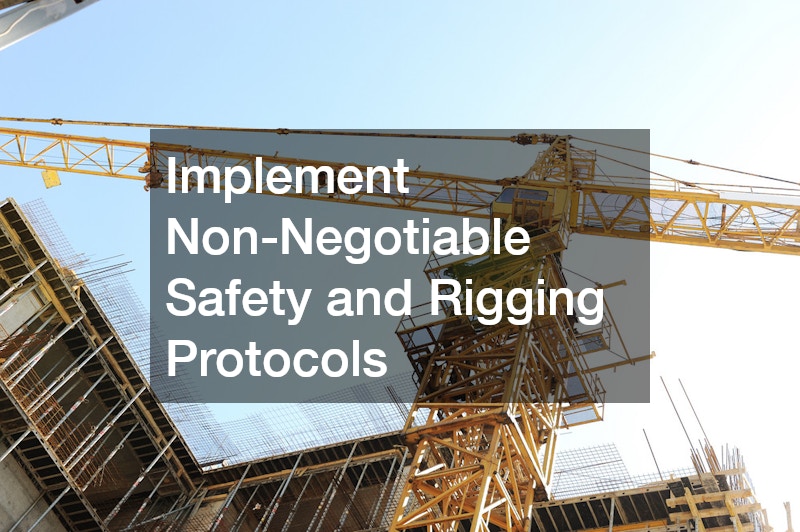
Once the equipment is assembled and the load is rigged, the operation enters its most critical and dangerous phase. Gravity is unforgiving, and there is zero margin for error. Establishing rigid, uncompromising safety protocols is the absolute most vital component of your entire project.
Assign a Dedicated Lift Director and Qualified Riggers
A safe lifting operation requires a distinct chain of command. Confusion regarding who is in charge is a primary cause of job site fatalities.
-
The Lift Director: Appoint a single, highly experienced individual as the designated Lift Director. This person has absolute authority over the entire operation. They are responsible for verifying the load weights, checking the weather, ensuring the rigging is secure, and giving the final authorization to begin the lift. No movement occurs without their express permission.
-
Qualified Riggers: The individuals attaching the load to the hook must be professionally trained and qualified riggers. They must understand how to calculate tension on slings, how to find a load’s center of gravity, and how to select the appropriate hardware.
-
Defining the Operator’s Role: The operator’s sole responsibility is to focus on the machine’s controls and follow the directions of the signal person. A reputable crane company will ensure their operators are empowered to utilize “stop work authority” if they feel a requested maneuver is unsafe, regardless of what the lift director says.
Establish Universal Hand Signals and Radio Protocols
When a load is suspended in the air, clear and instant communication is a matter of life and death, particularly when the operator is dealing with blind spots.
-
Mandate OSHA-Standard Hand Signals: Every single person involved in the lift, from the rigger to the operator, must be fluent in the standardized OSHA hand signals. Before the lift begins, a toolbox talk should be held to review these signals.
-
Utilize Dedicated Radio Frequencies: For blind lifts or operations requiring long distances, visual signals are impossible. You must provide high-quality, hands-free, two-way radios. Crucially, these radios must be locked onto a dedicated frequency that cannot be interrupted by other contractors on the site.
-
The Rule of the Signal Person: Establish a strict rule: only one designated signal person communicates with the operator. If multiple people are shouting instructions, disaster is imminent. However, reinforce the universal safety rule that anyone on the job site is authorized to give the “emergency stop” signal.
Set Strict Weather Thresholds
Mother Nature is the ultimate wild card in heavy lifting operations. You must monitor environmental conditions obsessively and have strict parameters for halting work. Excellent crane services will prioritize weather safety over project deadlines.
-
Monitor Wind Speeds Diligently: Wind is the greatest enemy of a suspended load. It acts upon the surface area of the load (the “sail area”), pushing it off-center and drastically increasing the radius and overturning forces on the machine. You must rely on anemometers mounted at the boom tip, not ground-level estimates. Establish a hard wind-speed limit (e.g., 20 mph) and halt operations immediately if gusts exceed it.
-
Watch for Lightning and Electrical Storms: Large steel booms act as massive lightning rods. If lightning is detected within a certain radius (typically 10 miles), the boom must be lowered, and all personnel must evacuate the immediate area.
-
Account for Visibility and Extreme Temperatures: Heavy fog or torrential rain that obscures the operator’s line of sight or the signal person’s visibility is an immediate cause for delay. Additionally, extreme cold can cause structural steel to become brittle, and extreme heat can affect hydraulic performance, both of which require adjustments to your operational parameters.
Conclusion
Successfully managing the logistics of moving massive materials is a monumental task that requires far more than simply renting a piece of heavy equipment. As this guide illustrates, a safe, efficient, and profitable lifting operation relies perhaps 10% on the machinery itself, and 90% on the rigorous preparation, logistical foresight, and uncompromising safety protocols you establish long before the engine is ever started. By meticulously calculating your load and terrain requirements, matching the exact right machinery to your timeline, thoroughly vetting your vendor partners, preparing your site for delivery, and strictly enforcing a clear chain of command and communication, you mitigate the massive risks inherent in this industry.
Remember, taking shortcuts during the planning phase inevitably leads to disastrous delays and budget overruns on the back end. We strongly encourage project managers to view the procurement and planning process not as a bureaucratic hurdle, but as the foundational bedrock of a successful build. Before initiating your next major project, take the time to download a comprehensive critical lift checklist, consult with structural and geotechnical engineers, and demand excellence from every professional involved in the operation.